
If your commercial ice maker machine has water but no ice, do not assume the whole unit is dead. In many cases, the machine has power and water, but one part of the freeze cycle is not functioning correctly.
How a Commercial Ice Machine Should Make Ice
Knowing the cycle makes troubleshooting quicker. Components of commercial ice machine include the water intake valve, water pump, evaporator plate, compressor, condenser coils, fan motor, control board and drain line.
The normal sequence is simple:
- The water supply fills the sump through the inlet valve or fill valve.
- The pump moves water flow over the cool evaporator.
- A slab or ice cubes form.
- The machine enters harvest, releases new ice, and drops it into the ice bin for dispensing ice.
- Old water may drain through the drain line or drain pump.
There are several varieties of commercial ice machines available, including modular, self contained and undercounter units, each suited for particular uses and settings. Modular ice machines are often bigger in size also frequently put on top of ice bin. Because of their size they are generally used in more busier restaurants and hotels. Similar cooling discrepancy are commonly found in walk-in cooler repair issues.
When water is present but there is no commercial ice, the failure usually falls into three buckets: no refrigeration, poor circulation, or the control board not advancing the cycle.
Basic Checks: Power, Mode, and Operating Conditions
Many “no ice” service calls turned out to be basic issues: power, mode, temperature, or clearance.
- Verify full power: breaker on, cord secure, front-panel switch on, and machine not shut down.
- Confirm mode: Scotsman, Hoshizaki, Manitowoc or alike brands often have ice, clean or standby modes. Clean mode maybe fill with water without making ice.
- Check room conditions: commercial ice machines freeze water best at 70°F air and 50°F water. A thermostat too high in a hot kitchen or near ovens might limit ice production.
- Check clearance: ice machines require adequate airflow, especially around larger AmeriKooler, Kolpak, and Norlake refrigeration setups where restricted airflow can hinder ice production.
If you correct any of these common issues, let the commercial ice maker run a full 20–40 minute cycle and see if ice starts forming before broader commercial refrigeration system repair concerns begin affecting connected cooling equipment.
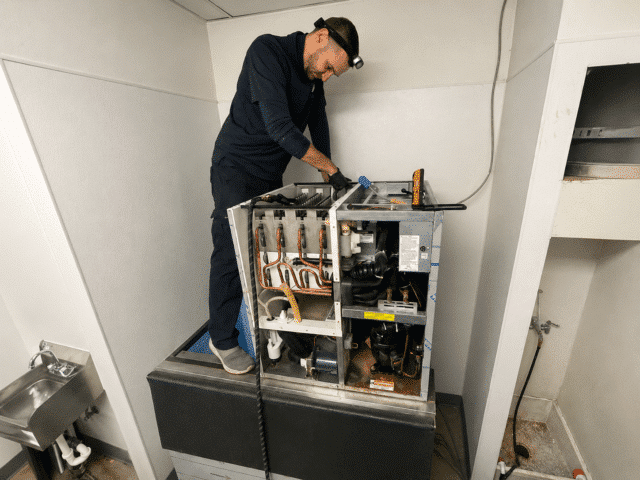
Water Supply Present but Not Freezing: Common Reasons
Before you blame the ice machine system, check water temperature, pressure, flow and scale if the tank has water but no ice.
- Water source check. Warm or hot water above 70°F or 21°C delays freezing. Warm room temperatures or incoming water can reduce ice machine freezing efficiency.
- Verify water pressure. Common reason for ice machine not producing ice is blockage in water supply, which can be caused issues by closed valves, kinks in line or clogged filters.
- Inspect the water supply valve, water supply line, water line, and any water valve that may be partly closed.
- Inspect the filter. Sediment and impurities build up in filters over time, potentially dropping water pressure below the minimum threshold required for ice production.
- If filter is jammed, there maybe enough water to fill sump but not enough flow to make ice. Using good water filter can help to keep ice machines from building up scale, which makes them work better also last longer.
- Listen for the pump. During freeze, confirm water is moving evenly over the evaporator plate, as airflow and circulation restrictions like these are also common in walk-in cooler repair situations.
- Clean scale and slime. Scaling of mineral buildup on evaporator plates prevents the refrigeration system from effectively lowering the temperature to freeze water.
- Hard water can cause scale buildup inside ice machines, leading to various operational issues such as clogged valves and reduced ice production.
Use manufacturer-approved cleaner only. Ice machines should be cleaned regularly to remove scale and mineral deposits, with a recommendation to replace the filter every 6 months to minimize build-up.
When the Machine Can’t Get Cold Enough
A commercial ice machine can have perfect water supply and still make no ice if heat is not removed efficiently.
- Clean condenser coils. Dirty condenser coils can significantly reduce ice production by causing the machine to overheat, similar to issues often seen during commercial refrigeration repair.
- Keep coils clear. Condenser coils must be kept clean to ensure efficient operation dust and grime can inhibit heat dissipation, leading to poor ice quality and potential machine failure
- Check the fan motor. The fan should spin when the compressor runs. A failed fan motor raises pressure and may trigger shutdowns.
- Remove obstructions. Boxes, blocked louvers, and tight cabinetry can stop commercial ice production completely.
- Watch for sealed system symptoms: strange noises, shorter cycling, warm lines, no frost after around 15 mins or oil stains from leak.
Refrigerant circuits, compressors or metering devices and water regulating valve on water cooled equipment are not DIY repairs. Call licensed refrigeration technician for it. Regular cleaning around machine prevents many potential issues to come.
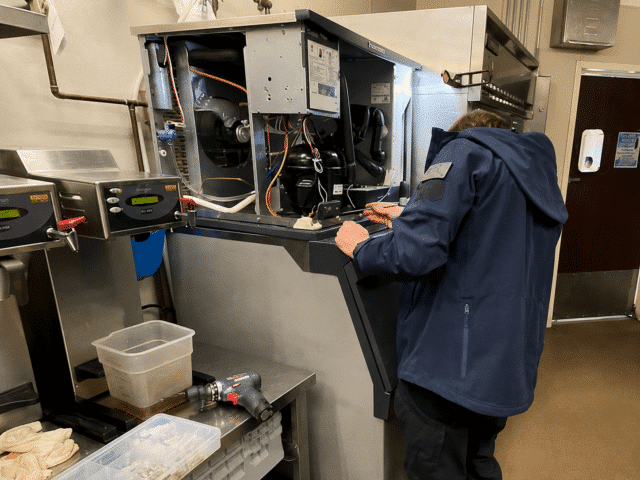
Controls, Sensors, and Drain Line Problems
Modern commercial ice makers mostly depend on sensors, probes and control board to manage fill, freeze, harvest and drain.
- Electro-mechanical parts in ice machines control the water level, with the float switch detecting the level and the water inlet valve managing water intake.
- A scaled ice thickness probe or water level probe can confuse the control board, causing perpetual fill, harvest, low ice production, or excessively thick ice.
- Bin controls and feeler arms can stop ice production if the ice bin is falsely “full.”
- A failed relay or burnt trace on the control board can stop the pump, compressor, or inlet valve even when the unit has water and power.
- A blocked or poorly installed drain line can leave standing warm water, cause repeated fill-and-dump cycles, or trip safeties. Check any drain pump for noise or failure.
Safe DIY steps: disconnect power, carefully clean probes with non abrasive pad, check for loose wire try to look at control board with power off. If errorsremain, the machine not making ice needs professional diagnosis. If a work order says “ice machine not making,” start with sensors, then refrigeration.
When to Call a Commercial Ice Machine Technician
Basic cleaning and visual checks are safe for most owners. But some common problems require gauges, meters, parts testing, and experience.
- Call a technician if you see:
- Repeated high-pressure or safety trips
- Loud compressor noise or strange noises
- Oil stains suggesting refrigerant leak
- Persistent error codes
- No frost despite water flow and a running compressor
Do not keep forcing a faulty commercial ice maker to run. A minor repair can become an expensive compressor replacement after several attempts.
Every six months schedule routine maintenance such as descaling, fan motor inspection, condenser coil cleaning, drain line inspection or control board testing or water supply inspection and water filter replacement. Cleaning/inspecting water supply or water filter and refrigeration system are part of routine maintenance for commercial ice machines, which’s necessary to avoid problems like low ice production and equipment failure.
The majority of problems with water but no ice start as scaled probes, clogged filters, or unclean coils. Regular maintenance preserves quality, maintains the ice maker producing enough ice, and minimises downtime before frequent issues turn into costly malfunctions.