
If your walk in cooler not working issue occurs during service, delivery, or a weekend rush, take action immediately. A heated commercial walk in cooler may cause food safety risk, food spoiling, health-code violations and expensive repairs rapidly.
Common Reasons a Walk-In Cooler Isn’t Cooling Right
Most of the cooler not cooling calls fall under familiar categories. The refrigeration system is a closed loop thus one malfunction puts stress on the compressor, fans, refrigerant lines and controls.
Main causes include:
- Thermostat or control board faults
- Dirty condenser coil or blocked condenser coils
- Failed evaporator fan, condenser fan, fan motor or motor bearings
- Failed defrost timer, defrost thermostat, defrost heater, or heater wires
- Low charge from refrigerant leaks
- Weak insulation, door seals, or door gaskets
Ice buildup, constant running, short cycling, no compressor sound, or unusual noises point toward specific faults. In many situations, businesses end up scheduling walk-in cooler repair after these warning signs begin affecting temperature consistency throughout the day.
Thermostat and Temperature Control Problems
The thermostat directs the compressor and evaporator fans to start pushing cold air inside, a broken thermostat may cause a walk in cooler to run warmer than planned and create temperature swings notably in older AmeriKooler, True Manufacturing and Norlake refrigeration systems.
Signs would include erratic temperatures, display faults, no call for cooling, or no click on mechanical controls. Many businesses first notice these issues during commercial refrigeration repair inspections after cooling inconsistencies begin affecting operations. Verify a 36°F setpoint, compare with a separate thermometer, and reset only if allowed.
Dirty or Blocked Condenser Coils
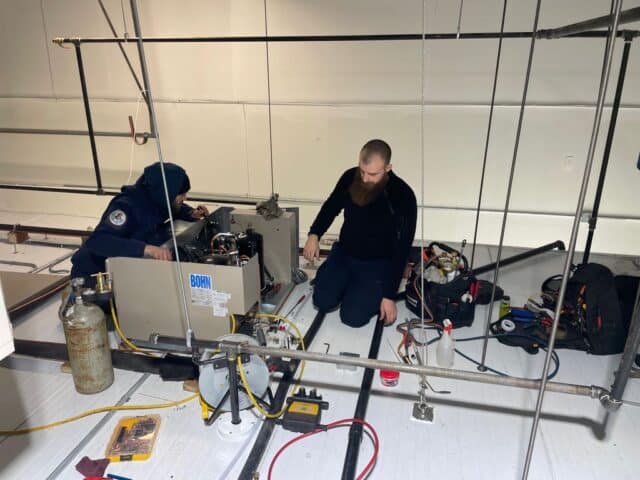
Condenser coils reject heat from the cooling process, often on a roof, outdoors, or rack. Dirty condenser coils block heat transfer, raise discharge pressure and head pressure, reduce cooling efficiency, and can lead to system failure or compressor failure. Neglecting condenser coils increases energy use and operating cost.
Problems like these are also among the more common reasons businesses eventually require broader refrigeration system repairs when cooling systems begin operating under excessive strain.
Turn off power and remove guards. Brush or vacuum fins. Clean condenser coils at least twice in year, use a safe cleaner if you can reach it. Regular cleaning is absolutely important to preserve cooling performance. In greasy kitchens parking lots or dusty roadways, Professional Maintenance is advised more regularly.
Evaporator Fan and Condenser Fan Issues
The condenser fan moves cold air around walk in cooler. If it breaks, cold air won’t reach all areas, which will lead to uneven temperatures and food going bad. There is no air flow, ice on the evap coil, blades that are stopped, and areas of warm air. Uneven airflow and inconsistent cooling are issues that frequently lead businesses to seek walk-in cooler repair before product temperatures become difficult to manage safely.
The condenser fan removes heat outside. The compressor might get too hot and shut down if the condenser fan isn’t working which stops the cooling process. Grinding or screeching fans, a heated compressor shell, or buzzing outside require quick attention. Clear plastic or cardboard blocking airflow . Fan motor repair and capacitor testing is for a certified technician .
Door Gaskets, Door Seals, and Infiltration
Worn door gaskets let cold air out and warm, humid air in, adding additional moisture, frost, and longer run times Similar temperature stability problems can eventually contribute to wine cooler repair issues in more sensitive refrigeration environments.
Look for brittle sections, missing magnets, frost around frames, visible tears or gaps, or light through the seal. Use the dollar bill test: if paper slips out easily, sealing is weak. Automatic closers and strip curtains are important in busy commercial walk in cooler systems. Clean gaskets with mild soap and replace broken seals immediately.
Defrost Cycle and Ice Buildup Problems
The defrost cycle melts ice from evaporator coils. A failed defrost cycle, low refrigerant or limited airflow from overpacking are common causes of evaporator continuously ice formation. Heavy ice, loud fans striking ice, drain pan overflow or a clogged drain line are signs of issue. In some businesses, these same airflow and freezing problems eventually begin affecting adjacent ice systems, leading to ice maker machine repair concerns as production becomes less consistent.
Incorrect schedules, failed defrost heaters, timers, sensors, or a defrost thermostat prevent full melting. Manual defrost only as instructed, doors closed, then call service if ice quickly returns.
Refrigerant Charge and Compressor Failure
Low refrigerant reduces suction pressure, affects super heat, and may freeze only near the tx valve or suction line. oil spots, or strange ice can all be signs of leaks. It is possible to save energy and money on your power bills by switching out old refrigerants for newer, more eco friendly ones. However fixing big leaks in R-22 systems is often too expensive because chemicals are hard to come by.
Signs that a compressor is getting old are loud grinding or clanking, spinning a lot, running hot to the touch when not cooling, clicking, breaker trips, or quiet when power is on. Technicians who are EPA certified only work with refrigerant, keep the pressure steady and do repairs on the generator.
When Your Walk-In Cooler Is Freezing Up Instead of Cooling
Freezing up means ice blocks airflow even if the system runs. It may affect the evaporator, ceiling, or fans, unlike a simple warm-box complaint.
Long door gaps, broken seals, too much stuffing, and bad stacking against evaporator fans are some of the things that can cause this. When you put too much food in a walk in cooler, wind is slowed down, making it harder to cool the whole thing. For air-defrost systems to work, the box temperature must be above 32°F. Some Polar King outdoor units use temperatures close to 34°F. Cut down on door time and defrost during times when there isn’t much usage.
Electrical and Control Issues That Stop Cooling
Turn off the power at the connection before you open the panels. Circuit switch, fuses, burnt smelling air, loose wires and burned contactors should all be checked.
A contactor gives power to the fan and blower if it breaks, the cooler stays warm. If pressure switch fails, overloaded, has power problems, or trips over and over, you should call an expert.
DIY and Professional Help for a Commercial Walk-In Cooler
Balance quick checks with warranties, code, and commercial refrigeration equipment safety. Owners can adjust settings, reorganize product for proper airflow, clean gaskets, and lightly clean accessible fins.
Gas leaks, compressor failure, control board faults, motor replacement and safety excursions maybe fixed by repair experts. If condenser unit or evaporator coil is 10 years old, fan motors, door seals or control boards, and minor electrical issues can be fixed. Broken door knobs, blocked drains and wrong thermostat settings are common issues. However, units over 10–15 years old or using phased-out refrigerants like R-22 should be replaced. Replace condensing units or evaporators over 10 to 15 years old with serious issues such compressor burnouts. Fixing or replacing depends on equipment age, refrigerant type, and failure extent. local repairers can provide 24 hour emergency delivery for compressor failures, gasket or leakage issues.
Preventive Maintenance to Keep Your Walk-In Cooler Working
Routine services prevents breakdown and keeps commercial freezer or cooler energy efficient. Regular preventive maintenance can reduce emergency breakdowns by about 70% compared with break-fix service.Businesses that practice preventative maintenance might reduce their energy bills by 15% to 30%. A well-maintained walk in cooler may last 15 to 20 years or more. Neglected walk in coolers can fail after 10 to 12.
Maintenance schedule: Clean coils twice a year, check fans, adjust electrical connections twice a year, check gaskets quarterly, check logs weekly, check noise monthly, check vibration monthly, check drains monthly, check ice monthly Schedule professional maintenance before summer heat or holiday rush for cooler repair planning, lower repair costs, fewer service calls, and stable product temperatures.